
The Speaking Page Every Founder Needs (But Most Don’t Have)
April 11, 2026 · By Matt McGarry
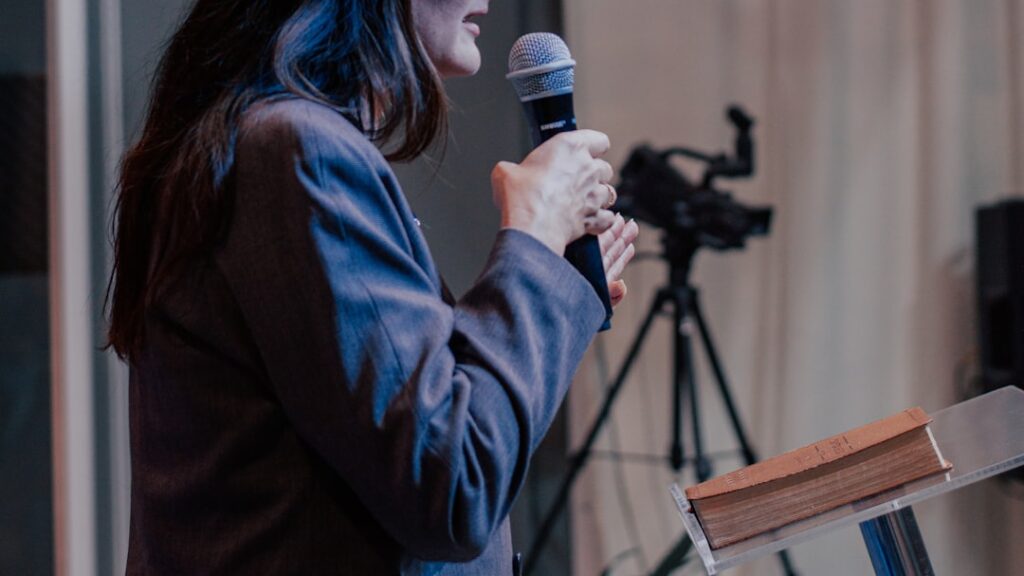
Every founder who’s serious about building authority needs a dedicated speaking page. Not buried in your about section. Not a line item in your services. A standalone page designed specifically to get you booked for speaking engagements.
Most founders either skip this entirely or create something so generic it actively works against them. And that’s a missed opportunity, because speaking is one of the most powerful authority-building tools available to you.
Here’s how to build a speaking page that actually gets you invited to speak.
Why Speaking Matters for Authority Building
Speaking engagements do three things for your authority that other marketing tactics simply can’t replicate.
They position you as the expert. When you’re introduced as a speaker, the audience immediately categorizes you as someone worth listening to. You’re not selling to them. You’re teaching them. That shift in dynamic — from vendor to educator — is one of the fastest ways to build trust with a room full of potential clients, collaborators, and referral sources.
They create content assets. Every speaking engagement gives you video clips, testimonials, photos, and proof of expertise you can use across all your marketing channels. A single 30-minute keynote can generate weeks of social content, blog material, and credibility markers for your website. This is the kind of compounding content that most founders underestimate.
They multiply your visibility in ways that digital marketing alone can’t. Audience members become referral sources. Event organizers recommend you to other organizers. One speaking engagement leads to three more. And unlike a social media post that disappears in 24 hours, a great talk gets remembered and talked about for months.
If you’re still building your authority foundation, start by making sure your brand positioning is dialed in first. Speaking amplifies whatever message you already have — so the clearer your positioning, the more impact every talk will have.
What Your Speaking Page Must Include
A speaking page isn’t a resume. It’s a sales page — but the product is you as a speaker, and the buyer is an event organizer with a lineup to fill and a reputation to protect. Every element on this page should reduce their risk and make booking you an obvious decision.
Your Signature Topics (3-5 Maximum)
Don’t list 15 things you can speak about. That signals you don’t have a clear area of expertise. Focus on 3-5 signature topics that showcase your specific knowledge and point of view.
Each topic should have a compelling title and 2-3 sentences describing what the audience will learn. Think about the transformation you’re offering. What will the audience understand, believe, or do differently after hearing you speak on this topic?
The best signature topics sit at the intersection of your deep expertise and what audiences are actively hungry to learn. They’re specific enough to sound original but broad enough to fit a variety of event themes.
Professional Speaker Photos
You need photos of you actually speaking. On stage, with a microphone, engaging an audience. Event organizers are visual decision-makers. They’re imagining you on their stage, and your photos either help or hurt that mental picture.
If you haven’t spoken yet, invest in professional photos that show you in “speaker mode” — presenting, gesturing, looking confident and authoritative. A good photographer can stage this in a conference room or co-working space with the right lighting and angles.
Don’t underestimate how much this matters. A founder with polished speaker photos will get booked over a more experienced speaker with blurry iPhone shots every time.
Video Clips
Even 30-60 seconds of you speaking can make or break a booking decision. Event organizers want to see your presentation style, energy level, and audience engagement before they put their event’s reputation in your hands.
If you don’t have speaking footage yet, create a short video of you presenting one of your key insights. Film it cleanly, edit it tightly, and treat it like a trailer for what you deliver on stage. One strong clip is worth more than a ten-minute unedited recording.
Testimonials from Event Organizers
Client testimonials are great, but testimonials from event organizers and audience members are gold for speaking bookings. They speak directly to what event organizers care about: did you deliver value, were you easy to work with, did the audience respond well?
If you’re early in your speaking career, ask for testimonials from podcast hosts, workshop attendees, or anyone who’s seen you present in any capacity. Social proof from someone who’s worked with you as a speaker carries more weight than a general business testimonial.
Your Speaker Bio
This isn’t your company bio. It’s written specifically to position you as a speaker. Lead with your expertise area, include your media credentials, mention any notable speaking experience, and keep it to one tight paragraph.
A strong speaker bio reads like a reason to book you, not a chronological history of your career. If you’ve been quoted in publications or featured in media, this is where those credentials do their heaviest lifting. If you haven’t been published yet, this free guide on getting your quotes published is a smart place to start building that credibility layer.
Technical Requirements
Make it easy for event organizers to book you. Include your AV needs, travel requirements, fee structure (or “contact for fees”), and any other logistics they need to know. The easier you make the booking process, the more likely an organizer is to follow through. Friction kills bookings.
Study This Example
Take a look at Katie Gutierrez’s speaking page. Notice how it immediately establishes her expertise in Biographical Design, showcases her signature topics, and makes it easy for event organizers to envision her at their event.
The page positions her not just as an interior designer, but as someone with a specific methodology and perspective worth featuring at an event. That distinction matters. Event organizers aren’t looking for generalists. They’re looking for someone who brings a fresh angle their audience hasn’t heard before.
Pay attention to how Katie’s page balances credibility with accessibility. It says “I’m an expert” without saying “I’m an expert.” The topics, the photos, the testimonials, and the bio all work together to make that case without ever having to state it directly.
How to Get Your First Speaking Opportunities
The biggest barrier to speaking isn’t talent. It’s inventory. You need footage, testimonials, and proof of concept before the bigger stages will take a chance on you. Here’s how to build that inventory quickly.
Start local. Chamber of commerce events, local business groups, industry meetups. These are easier bookings and give you the experience and content assets you need for bigger stages. Don’t dismiss smaller events — a well-delivered talk to 30 people who share it with their networks can open more doors than a mediocre talk to 300.
Leverage your network. Who do you know who organizes events, sits on conference committees, or runs professional groups? Let them know you’re available to speak and send them your speaking page. This is where having a polished, dedicated page pays for itself immediately. You need something professional to send when the opportunity comes up.
Pitch podcasts aggressively. Podcast appearances are speaking opportunities that create video content, expand your reach, and often lead to live speaking invitations. Hosts talk to other hosts. A great podcast episode becomes a referral engine. And the clips you pull from podcast interviews can populate your speaking page until you have stage footage.
Not sure what angle to pitch or where your unique expertise sits? Chat with us.
Create your own opportunity. Host a workshop, organize a panel, or speak at your own company event. Use that experience to create the photos, videos, and testimonials your speaking page needs. The content you generate from a self-hosted event is just as valuable as content from a third-party booking — and you control the production quality.
The Bigger Picture
A speaking page isn’t a nice-to-have. It’s infrastructure for your authority. It works while you sleep, making the case for you every time an event organizer lands on your site or receives your link in a pitch email.
But it’s also just one piece of a larger authority ecosystem. Speaking feeds your content. Your content feeds your media presence. Your media presence feeds your speaking opportunities. The founders who build real, lasting authority are the ones who connect these channels into a system that compounds over time.
If you want to see what a full authority-building system looks like in action, explore how published designers are leveraging media, speaking, and content together.
Your Next Step
Block out two hours this week to create your speaking page. Choose your signature topics, write your speaker bio, and put together whatever visual assets you have. Even if it’s not perfect, having a dedicated speaking page immediately makes you more bookable than 90% of other potential speakers.
If you need help developing your signature topics or building a speaking page that gets you booked, that’s exactly what we do. A great speaking page is one of the fastest ways to accelerate your authority building.
Ready to build your own story?
Discover how Design Story PR can amplify your brand’s presence in the world of interior design. Reach out today to explore our bespoke PR solutions tailored to your unique vision.
Contact Us